Need mold remediation in Brighton?
Ready to get started? Request an estimate through the form, or email contact@nicehotel.garden. A local provider in our network will follow up with next steps.
No obligation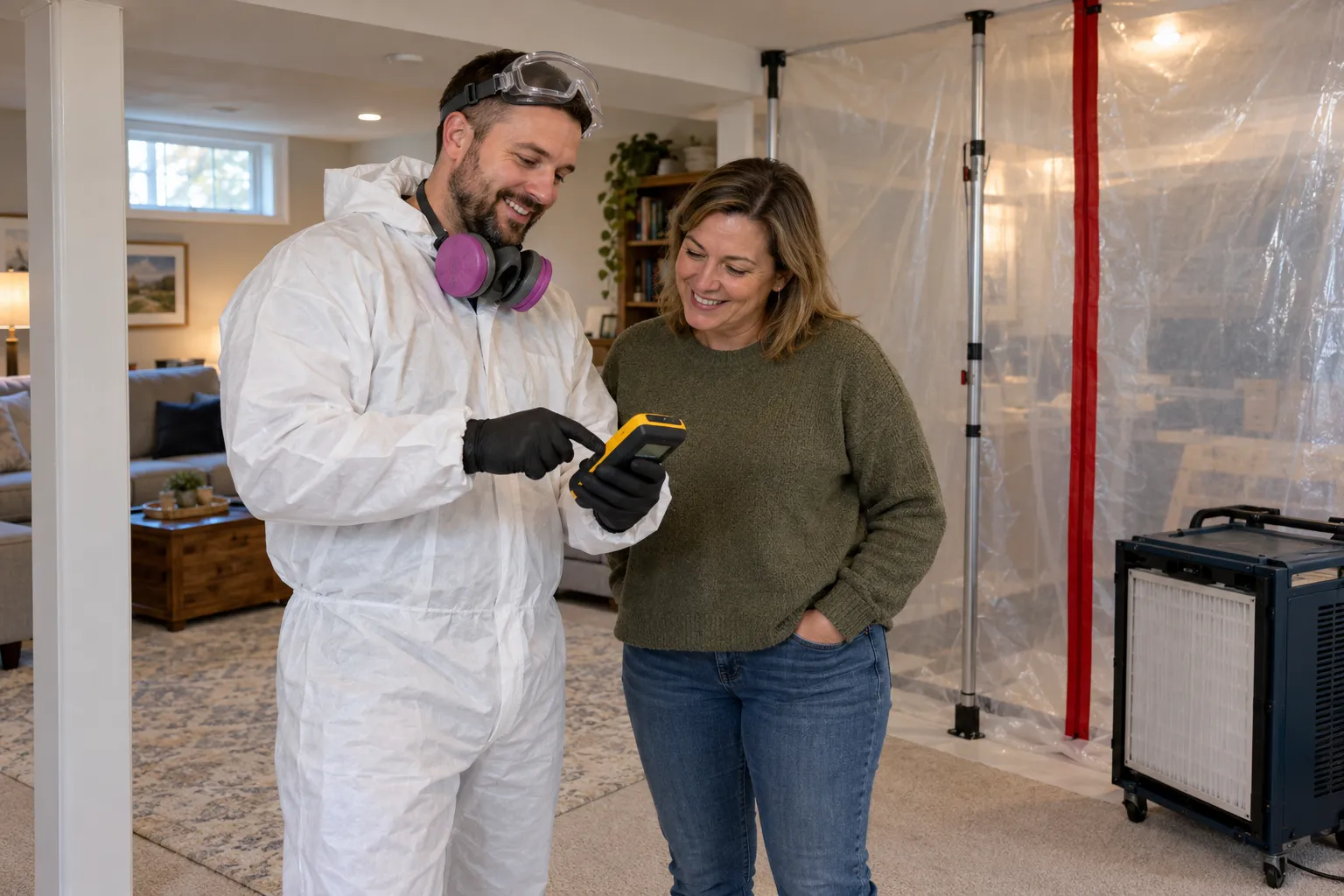
Request an estimate to get started
Mold remediation is the careful process of finding mold, sealing it off, removing it, and fixing the moisture that fed it. It is more than wiping a wall with bleach. Done right, the mold stays gone and your indoor air gets cleaner.
Nicehotel Mold Help is a referral service. We do not do the work. Providers do the work. We connect homeowners across the Brighton area with independent local providers who handle residential mold removal. A provider in our network can inspect the space, explain what they find, and give you a written plan.
This page explains each step and the typical price ranges, so you can ask smart questions and compare quotes in writing before you decide.
So you spotted fuzzy spots on a wall, or you smell something musty in the basement. What now? Take a breath. Mold is common, and it is fixable.
First, stay out of the affected area as much as you can. Do not scrub it dry or blast it with a fan. That can spread spores to other rooms. Then ask a local provider to take a look.
Yes, it usually does. Mold needs moisture, and it spreads when moisture sticks around. A small patch on drywall can reach the wood framing behind it.
In our region, damp springs and humid summers give mold plenty of help. Basements with sump pumps can stay damp after heavy storms or spring flooding. The sooner a provider checks, the smaller the job tends to be.
Good question. Most jobs follow the same basic path:
Your provider will explain which of these apply to your home. Ask for the steps in writing.
Because mold spores float. When a surface is disturbed, spores can drift into clean rooms and settle there.
Providers often use plastic sheeting and negative air machines with HEPA filters. These keep the work zone sealed and the air moving in one direction. If a quote leaves out containment on anything bigger than a small patch, ask why.
It can, if the moisture problem stays. Cleaning mold without fixing the water source is like mopping while the faucet runs.
The cause might be a leaky pipe, a roof leak after hail, poor ventilation, or damp foundation walls. Old frame houses, bungalows, and ranch homes each have their own weak spots. A good provider looks for the source and tells you what needs repair. Sometimes that repair is a separate trade, such as a plumber or roofer.
Three things matter most: how big the area is, what material is affected, and how hard it is to reach. Mold on a few square feet of drywall costs far less than mold across a crawl space or attic.
Other factors include the need for containment, removal of insulation or flooring, and any rebuilding afterward. Prices vary by job and by region. The table below shows typical U.S. ranges, but only a written quote reflects your home.
A written quote keeps everyone on the same page. It should list the area covered, the steps, the materials removed, and what is left for you to handle.
Quote in writing, and compare at least two if you can. Ask what is not included, such as rebuilding walls or repainting. Surprises are easier to avoid when the details are on paper.
Sometimes. Some policies may cover sudden damage, like a burst pipe, but often not mold from long-term seepage or neglect. Check your policy, and ask your agent before work starts.
Providers can often help document damage with notes and photos for a claim. They cannot promise what your insurer will decide.
Ask first, then act. These questions help:
Providers in our network are independent businesses. Verify their licensing and insurance yourself before you hire.
The provider should confirm the work is done. Some homeowners also hire an independent tester to check the air or surfaces afterward, which is often called clearance testing.
Then comes rebuilding, if needed. To keep mold away, keep indoor humidity under about 50 percent, run bathroom fans, and watch the sump pump. Check the basement after big storms.
The provider looks at affected areas and finds the water source that is helping the mold grow.
Plastic barriers and HEPA air machines help keep spores from drifting into clean parts of the house.
Damaged porous materials come out, and surfaces that can be saved are cleaned.
The provider reviews the work and may suggest clearance testing before rebuilding starts.
Prices depend on size, materials, and access. These are typical U.S. ranges and they vary by job. Use them to plan, then get a written quote from a local provider for your actual home.
| Item | Typical range | Notes |
|---|---|---|
| Small area (under 10 sq ft) | $500 – $1,500 | Often one wall or a bathroom corner |
| Medium area (10 – 100 sq ft) | $1,500 – $4,000 | May need drywall removal |
| Basement or crawl space | $2,000 – $6,000 | Depends on size and moisture |
| Attic mold | $1,500 – $5,000 | Insulation or sheathing may need work |
| Whole-home or severe cases | $10,000 – $30,000 | Large spread, extensive rebuilding |
| Mold testing or clearance | $300 – $1,000 | Price varies by samples taken |
Tell us about the mold, the room, and what you have noticed so far.
Nicehotel Mold Help refers you to an independent local provider in our network.
Compare the scope, price, and exclusions, then ask any questions you have.
If you hire a provider, you agree on timing and details directly.
We explain what drives the price and what each step means, in simple words.
Nicehotel Mold Help connects you with providers. Providers do the work, and we say so clearly.
We encourage you to get scope and price on paper before any work begins.
Independent providers know the climate and homes across the Brighton area.
Ready to get started? Request an estimate through the form, or email contact@nicehotel.garden. A local provider in our network will follow up with next steps.
No obligationTypical U.S. jobs run from about $500 for a small area to $10,000 or more for large or severe cases. Costs vary by size, materials, and access, so get a written quote.
Bleach rarely solves the problem, especially on porous materials like drywall or wood. Disturbing mold can also spread spores. Small, surface-only spots may be manageable, but larger areas are better left to a provider.
Some policies may cover mold that comes from sudden damage, such as a burst pipe, but many exclude long-term moisture problems. Check your policy and ask your agent before work begins, because coverage differs widely.
Ready to get started? Request an estimate through the form, or email contact@nicehotel.garden. A local provider in our network will follow up with next steps.
No obligation